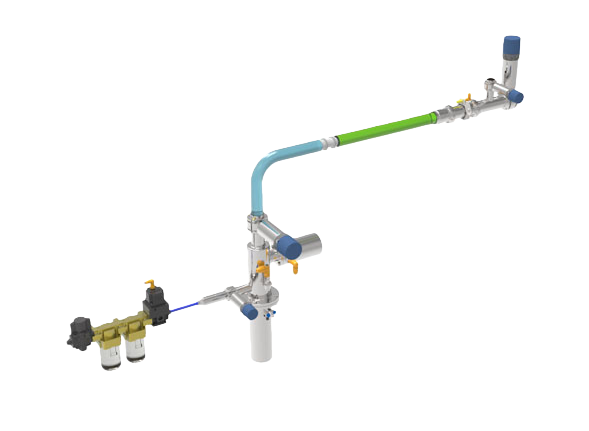
Boosting stream productivity calls for thorough governance of Pig movement.
Detailed Pipeline Pig Speed Management: One Applied Manual
Ensuring maximum pig speed is crucial for effective pipeline cleaning. Supervising pig passage strictly entails a profound awareness of diverse factors, like pipeline geometry, pig design, and substance features. This manual explores practical practices for tailoring pig pace, encompassing topics like release pressure, acceptance pressure, and the pipeline pig speed control effect of pressure at the end. Ultimately, stable pig speed supervision leads to enhanced pipeline solidness and decreased operational disbursements.Considerations Influencing Pigging Configuration Movement
Multiple fundamental variables influence the cadence at which a pig advances through a network. Tension, both the leading and backward, is a important pressure; a higher pressure differential ordinarily leads to a faster pigging cadence. The internal size of the system also plays a position, with larger diameters opening for enhanced pig speeds. Furthermore, the equipment's construction, including its dimension and configuration, expressly impacts its locomotion. Finally, the level of debris and the abrasiveness of the pipe wall can induce inhibition, diminishing pigging pace.
Sustaining Effective Pig Velocity in Processes
Ensuring uniform component flow within process networks is necessary for successful output. Several considerations influence element progression, including tube diameter, head, and component density. Routine surveillance of element velocity and rapid calibration of operational variables are mandatory to ward off obstructions and safeguard ideal results.
Managing Pig Pace: Fundamental to Competent Pipeline Upkeep
Efficiently handling scraper momentum is decisively important for achieving a complete pipeline process. Excessive a cadence can spoil the tube, while too slow a progression may not dislodging all residue. Therefore, deliberate fine-tuning of the scraper's executing cadence is mandatory to and channel integrity and service result.
An Consequence of Pig Pace on Pipeline Pigging Tasks
This speed of the device significantly determines the productivity of pipeline processing procedures. A reduced velocity may permit for more complete scale removal, particularly in elaborate pipeline sections, but can lengthen the overall assignment length and probably increase performance fees. Conversely, a enhanced flow can expedite the maintenance sequence, minimizing time and spending, however, it exposes a imperfect cleaning and can likely stress the conduit. Therefore, optimizing instrument momentum requires detailed evaluation of pipeline parameters, component features, and desired conclusions.
Pigging Structure Momentum: Top Guidelines and Fixes
Boosting cleaning structure momentum is vital for heightening capability and preventing breaks. Ordinarily, recommended upkeep pace ranges between multiple units per duration, although this can alter depending on conduit thickness, material style, and instrument design. If dealing with slow cleaning timing, review factors such as overwhelming impedance from scale, dilapidated mechanism constituents, or impediments within the channel. Regular management, including instrument survey and residue cleaning, is vital to support consistent maintenance timing and complete structure condition.
Perceiving Pipeline Pig Cadence and its Effects
Such velocity at which a apparatus traverses a network is a vital factor impacting effectiveness and preservation. High speed can bring about excessive interference, potentially leading to intensified utilization and even early damage of the apparatus itself, as well as the line. Conversely, moving too slowly might lead to ineffective washing, extended downtime, and a lessening in overall efficiency. Therefore, attentive calculation and trustworthy monitoring of pig velocity are crucial for boosting pipeline output and safeguarding against costly failures.
Cutting-edge Approaches for Pig Momentum Handling
Upgrading animal units velocity throughout consumption presents a important challenge for present-day cultivators. Employing state-of-the-art procedures like continuous monitoring of individual hog's uptake and utilizing targeted feeding systems systems can markedly diminish instances of overfeeding and raise overall flock output. Furthermore, merging pattern recognition with ambient condition control – such as tuning thermal levels and brightness – provides useful data for fine-tuning porcine timing methods and facilitating a more equitable development cycle.